Evidence For:
- Thick acrylic socks (click to view image)
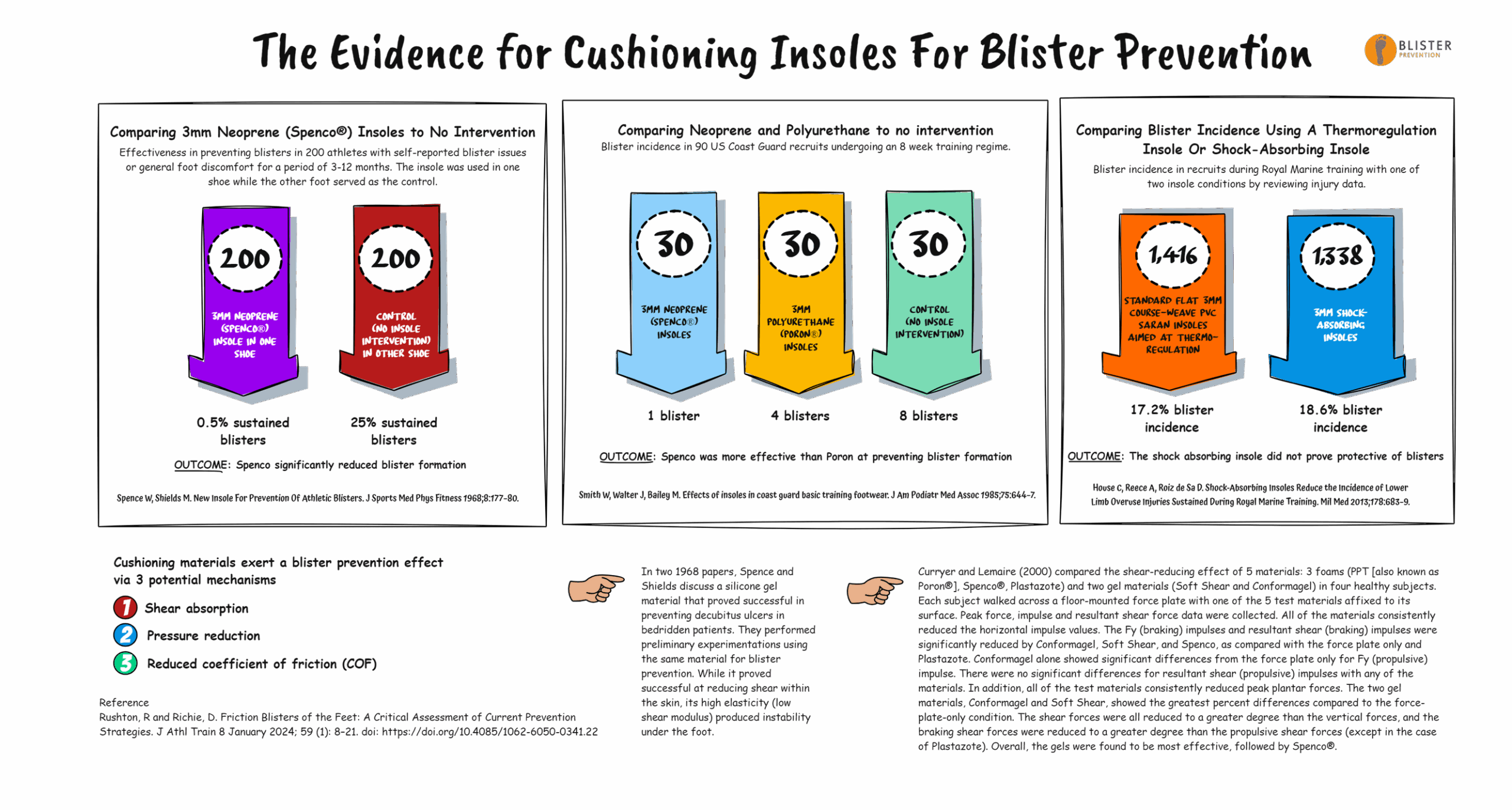
- Neoprene (Spenco) insoles (click to view image)
- Familiarity with footwear and activity (click to view image)


Evidence against
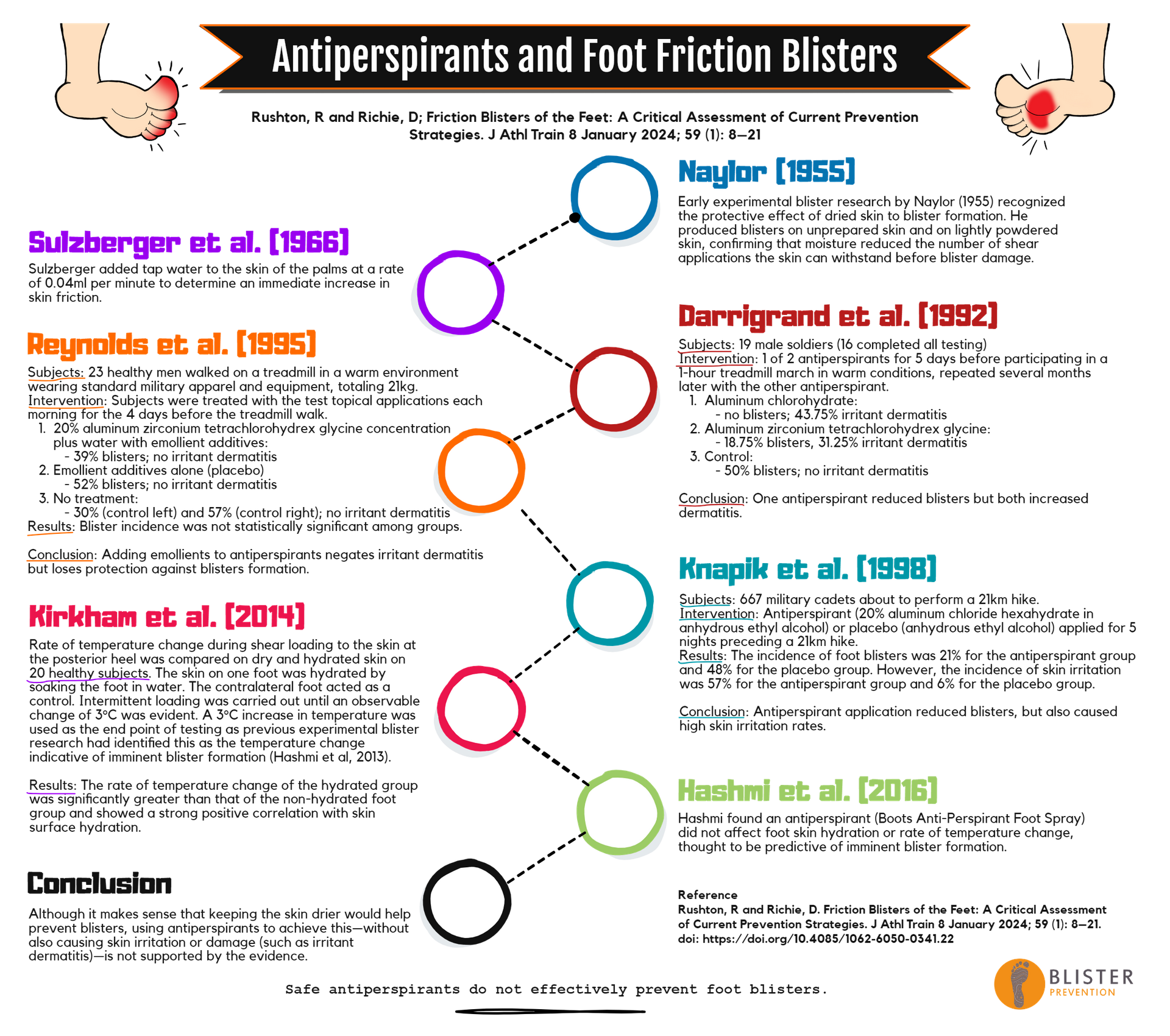
- Antiperspirants (click to view image)
- Powders (click to view image)

Equivocal evidence
- Paper tape (click to view image)
- Double socks (click to view image)


No evidence
- Lubricants
- Rigid tape, Fixomull Stretch, Kinesio Tape, Moleskin
- Pressure deflective padding
- Optimised shoe-fit
- Toesocks
- Specific sock yarns, fibres, blends
- Specific sock constructions (other than thickness/dense padding)
- PTFE Patches / ENGO Patches / Shearban
- PelliTec Pads
- Gel toe protectors
- Digital orthoses (eg: toeprops)
- Biomechanical interventions (eg: orthoses, strengthening, stretching)
- Gait alterations
- Specific footwear properties (eg: heel height differential)

How to progress with blisters in the absence of evidence
- Understand that friction blisters of the feet are caused by repetitive shear deformation.
- Understand that the movement force associated with friction blisters is the bones moving within the foot, while friction force keeps the skin stationary, unable to move in sync with the bone.
- Understand the many mechanisms for blister prevention and how to choose to most appropriate for the anatomical location
- Learn more with Blister Prevention University
Audience discussion
- Prevention and treatment of toenail blisters
- Preparing our patients for big adventures

Leave a comment
All comments are moderated before being published.
This site is protected by hCaptcha and the hCaptcha Privacy Policy and Terms of Service apply.